
Les Misérables is a melodramatic novel written from the premise that any man can rise above his circumstances to reach perfection. The plot of the novel is suspenseful from start to finish; it follows both Jean Valjean's and society's struggles with good and evil.
Hugo began to think about Les Misérables as early as 1829. He observed the specific incident that triggers the novel's action on the streets of Paris in 1845. On a sunny but cold day, he saw an impoverished man being arrested for stealing a loaf of bread. As the man stood on the street, an ornate carriage pulled up beside him. Inside there was a dazzlingly beautiful woman dressed in velvet, playing with a child hidden under ribbons, embroidery and furs. The impoverished man stared at the woman in the carriage, but she was totally unaware of him. Hugo wrote that he saw this man as "the spectre of misery, the ghostly forewarning in full light of day, in the sunshine, of the revolution still plunged in the shadows of darkness, but emerging from them. The moment he become aware of her existence, while she remained unaware of his, a catastrophe was inevitable."
As the years passed, Les Misérables evolved as Hugo's own life experiences shaped his philosophy. He incorporated personal memories of all kinds in the novel, often mixing everyday trivial fact with fiction to give the story a sense of journalistic truth. By the time it was published in 1862, it had become an epic novel, expressed in rich prose within a strong framework of history, philosophy, and political theory. "This is a leviathan I am about to ship out to sea," he said before publishing.
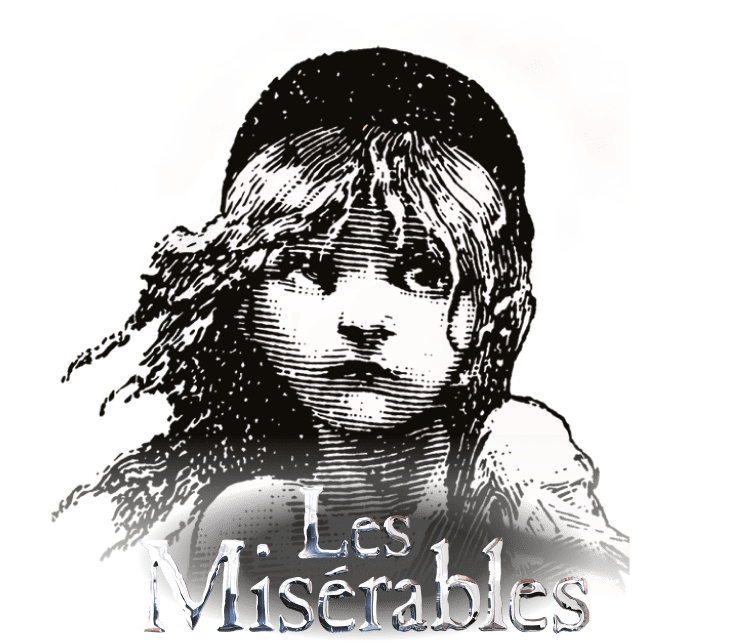
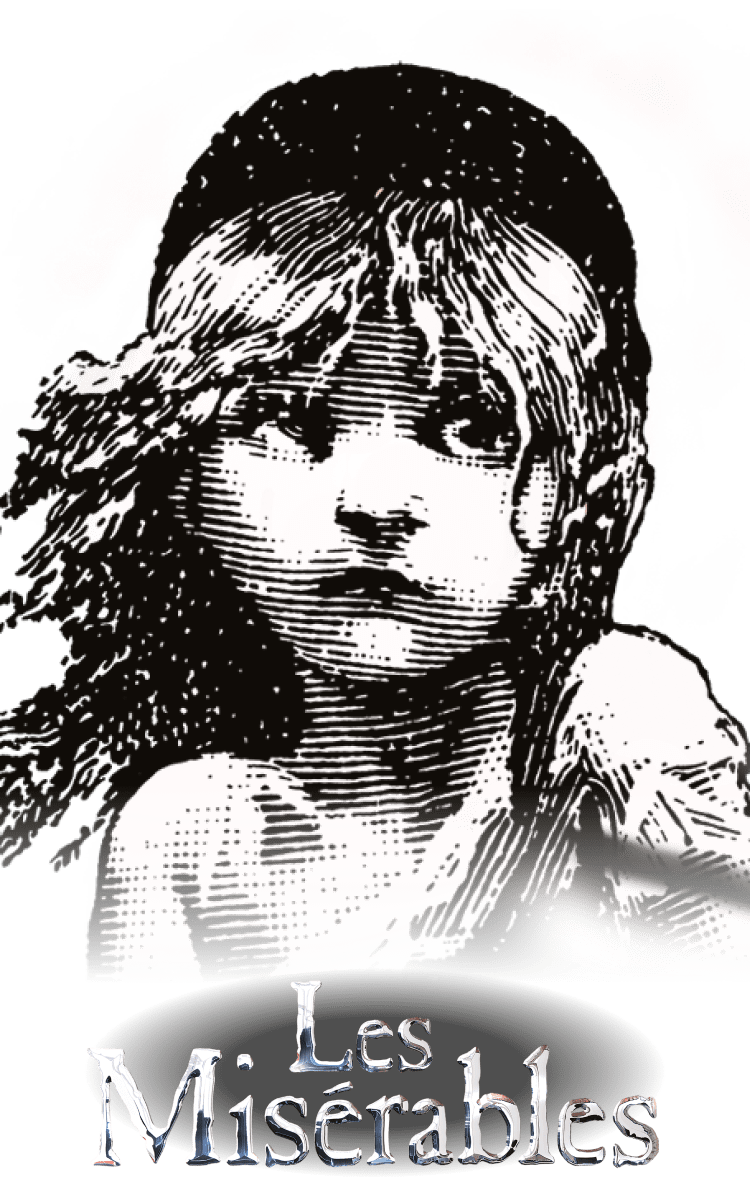
When Les Misérables was published in 1862, it generated more excitement than any book in the history of publishing. It was widely advertised in Paris with giant sketched portraits of Cosette, Fantine, Marius and Jean Valjean.
Foreshadowing the success story of the musical, over one hundred years later, the novel Les Misérables was, initially, a popular, rather than a critical, triumph. "All the reviews," wrote Hugo, "are reactionary and more or less hostile."
Like the musical, critical opinion had absolutely no effect on public interest in Les Misérables. Bookshop owners and other vendors literally battled to buy copies of the book for their customers. Long lines and traffic jams were observed all over the city as people fought to buy one of the 48,000 copies put on sale the first day.
This phenomenon was echoed in 1985, when the musical version of Hugo's novel opened in London to mostly poor reviews. When Cameron Mackintosh, discouraged by the adverse critical response, called the box office, he was greeted by a happily busy ticket salesman. "I'm amazed you managed to get through," Mackintosh was told, "The phones haven't stopped ringing." As with the novel, the story of Les Misérables had touched a common chord, and its great success was built on word of mouth.
Hugo wrote about his book, "I don't know if it will be read by everyone, but it is meant for everyone. It addresses England as well as Spain, Italy as well as France, Germany as well as Ireland, the republics that harbour slaves as well as empires that have serfs. Social problems go beyond frontiers..." To further his goal of presenting the ideas of Les Misérables to as wide an audience as possible, Hugo urged his publishers to bring out cheaper editions of the book in small print to make it available to ordinary people.
The initial French language success was copied all over the world as soon as the book became available in translation. The book was a sensation in America, whose own civil unrest at the time seemed to many to mirror the events and feelings of the novel. Indeed, Confederate soldiers read the novel voraciously, calling themselves "Lee's Miserables."
As with any work of art pleading for social change, the novel Les Misérables acquired many enemies. Conservatives feared the social impact of the novel, and the Vatican banned it for several years. A theatrical version, written by Hugo's son Charles, was banned in France, opening instead in Brussels. The French newspaper The Constitutionnel wrote that if the ideas of the novel were acknowledged, "no part of the social order would remain standing."
Nonetheless, Les Misérables has been translated into nearly every language and, during the past century, has become one of the best-selling books in history.